Research
To understand the pain points of the complex systems of a travel app, I dove into usability testing and competitor analysis of existing travel apps. To make sense of the various research methods and findings, I applied analytical techniques to structure the information and draw meaningful conclusions. I focused on an affinity diagram and a customer journey map, which outlined each key stage of the process and highlighted the main issues.
From this data, the main concerning issues were -
Users felt overwhelmed by the cluttered interfaces, excessive options, and frequent advertisements presented throughout the booking journey, from the home screen to checkout.
Users wanted travel apps to provide greater inspiration, helping them discover destinations and explore holiday options tailored to their interests.
Users found the date selection process difficult to navigate, particularly when selecting return flights, resulting in confusion and increased effort during the booking process.

Design
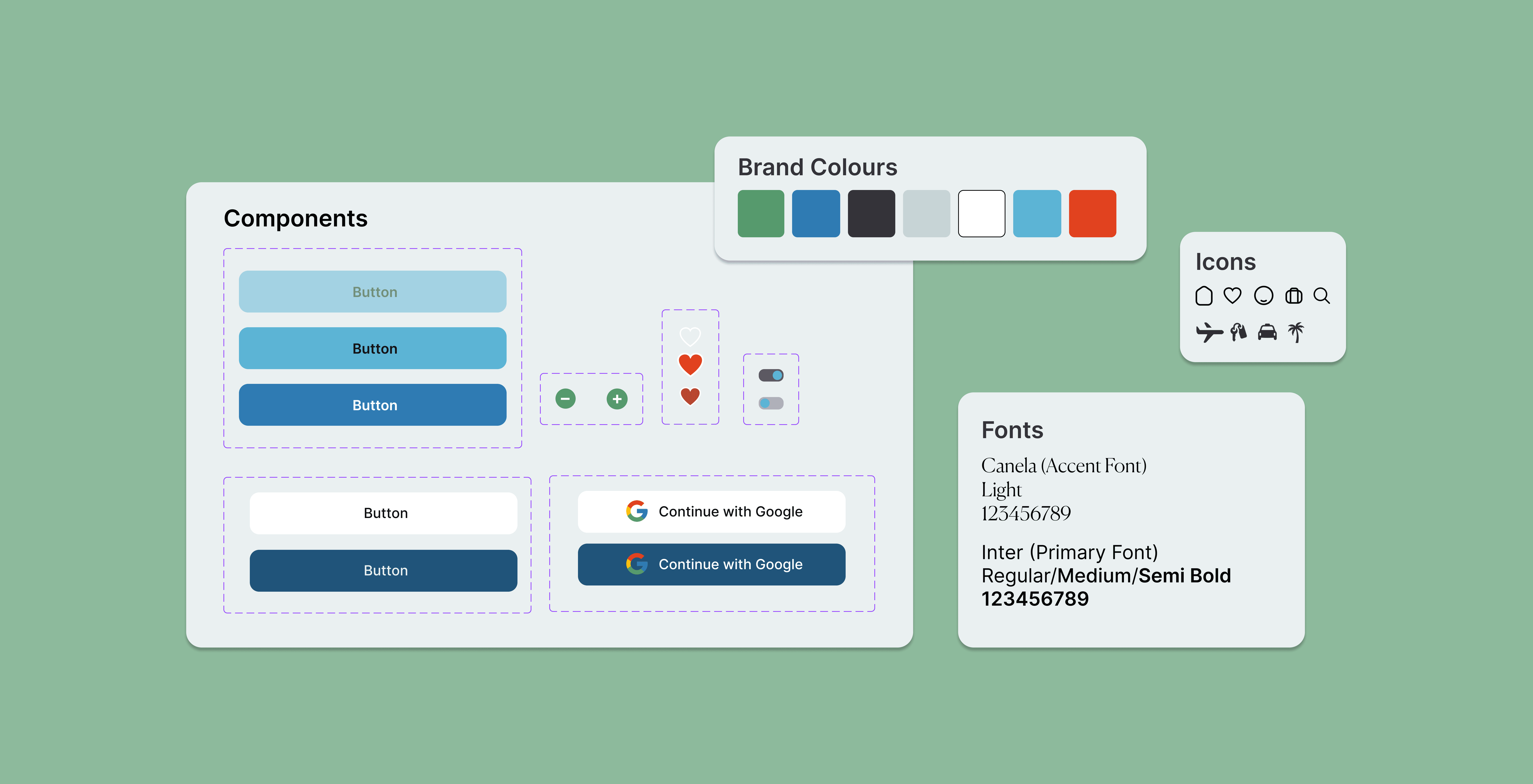
Islander was designed to create an immersive, inspiration-led experience by focusing attention on destination imagery with minimal distractions. The clean layout and generous spacing establish a premium feel while allowing users to engage emotionally with the content.
A key focus was reducing cognitive load through progressive disclosure, introducing information gradually rather than overwhelming users with choices. Strong visual hierarchy, subtle styling, and consistent design elements help maintain a seamless and intuitive journey from discovery to booking.